Explanation of how tracing doctrine developed in California family law. This book shows how courts created, refined, and standardized tracing rules over time.
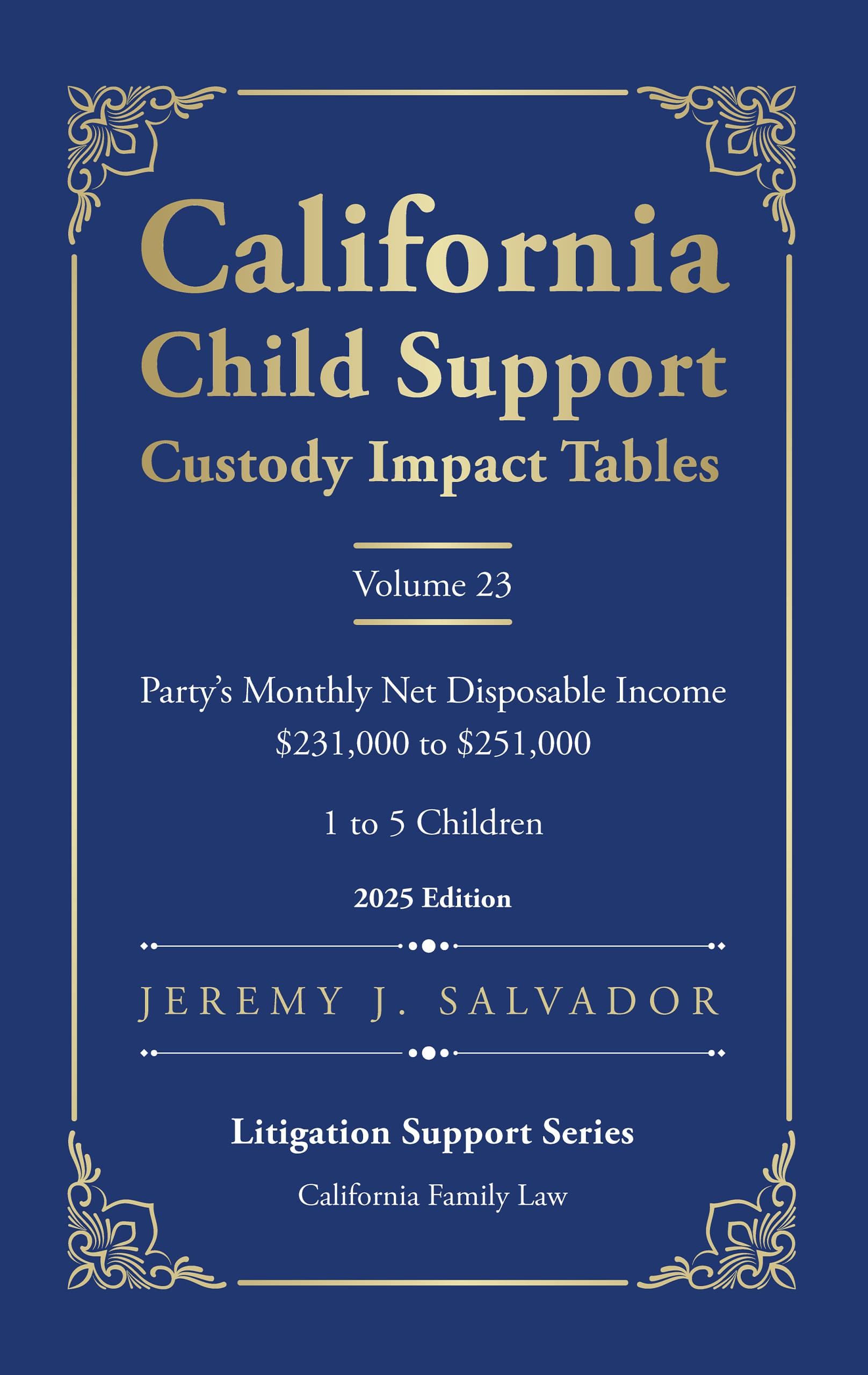
This volume moves into an even higher income bracket, tracking how the guideline formula scales as monthly net disposable income continues to climb, with family size held within the standard one-to-five range.
This volume moves into an even higher income bracket, tracking how the guideline formula scales as monthly net disposable income continues to climb, with family size held within the standard one-to-five range.
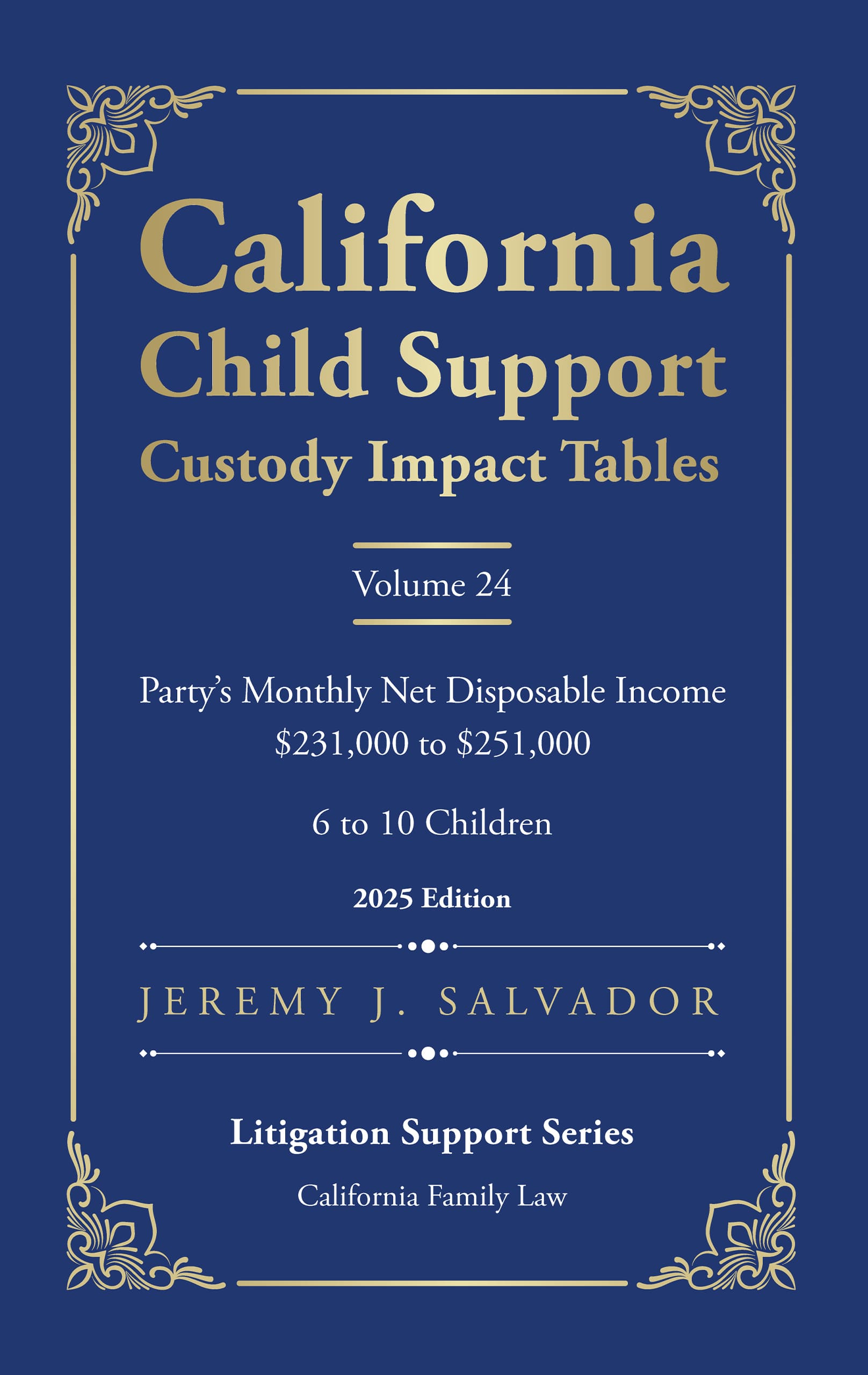
This volume pairs the same higher income bracket with larger families, showing how support obligations are calculated when six to ten children fall within this range.
This volume pairs the same higher income bracket with larger families, showing how support obligations are calculated when six to ten children fall within this range.
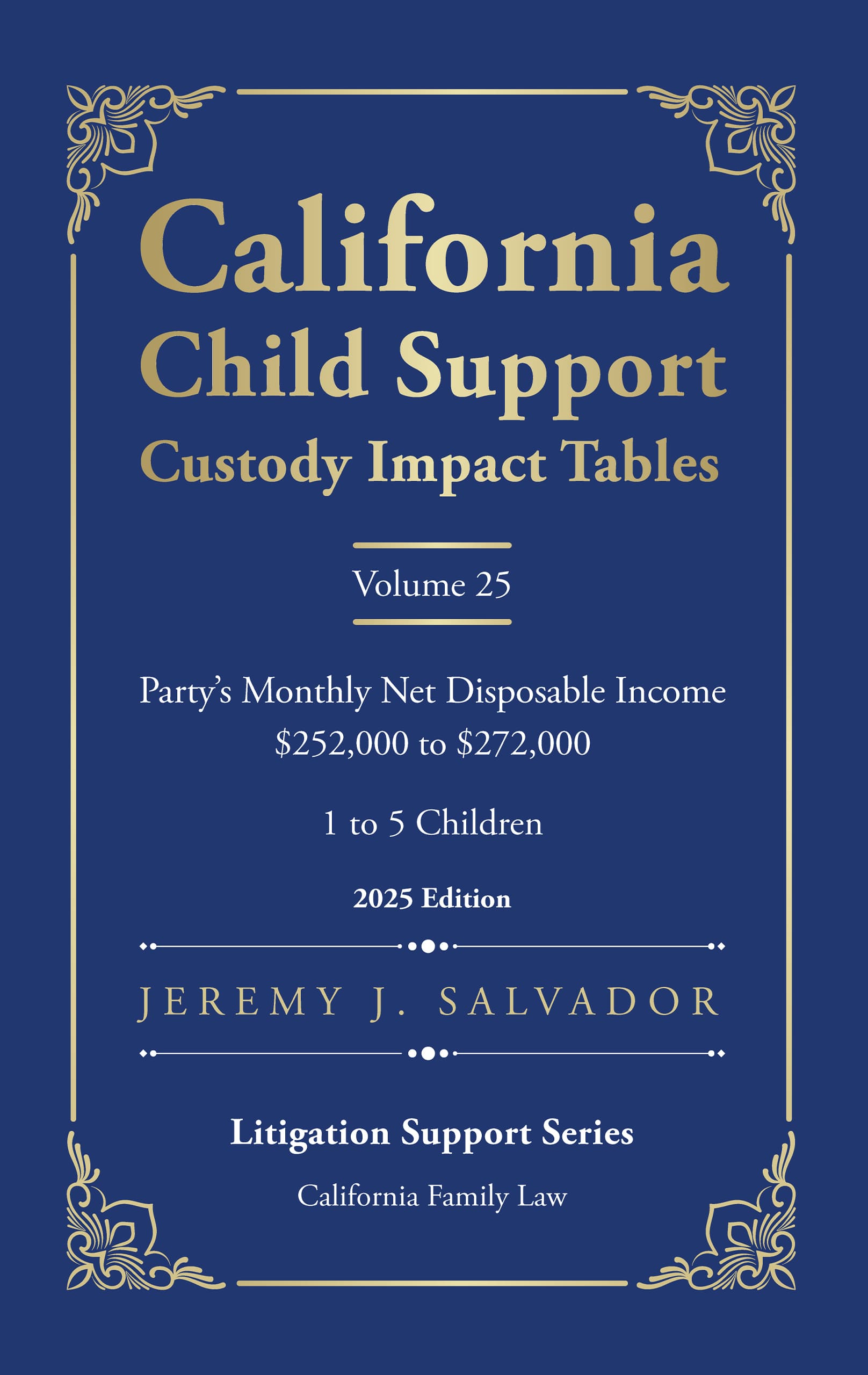
This volume advances into a further elevated income bracket, tracking how guideline support calculations behave as monthly net disposable income continues to rise, with family size held within the standard one-to-five range.
This volume advances into a further elevated income bracket, tracking how guideline support calculations behave as monthly net disposable income continues to rise, with family size held within the standard one-to-five range.
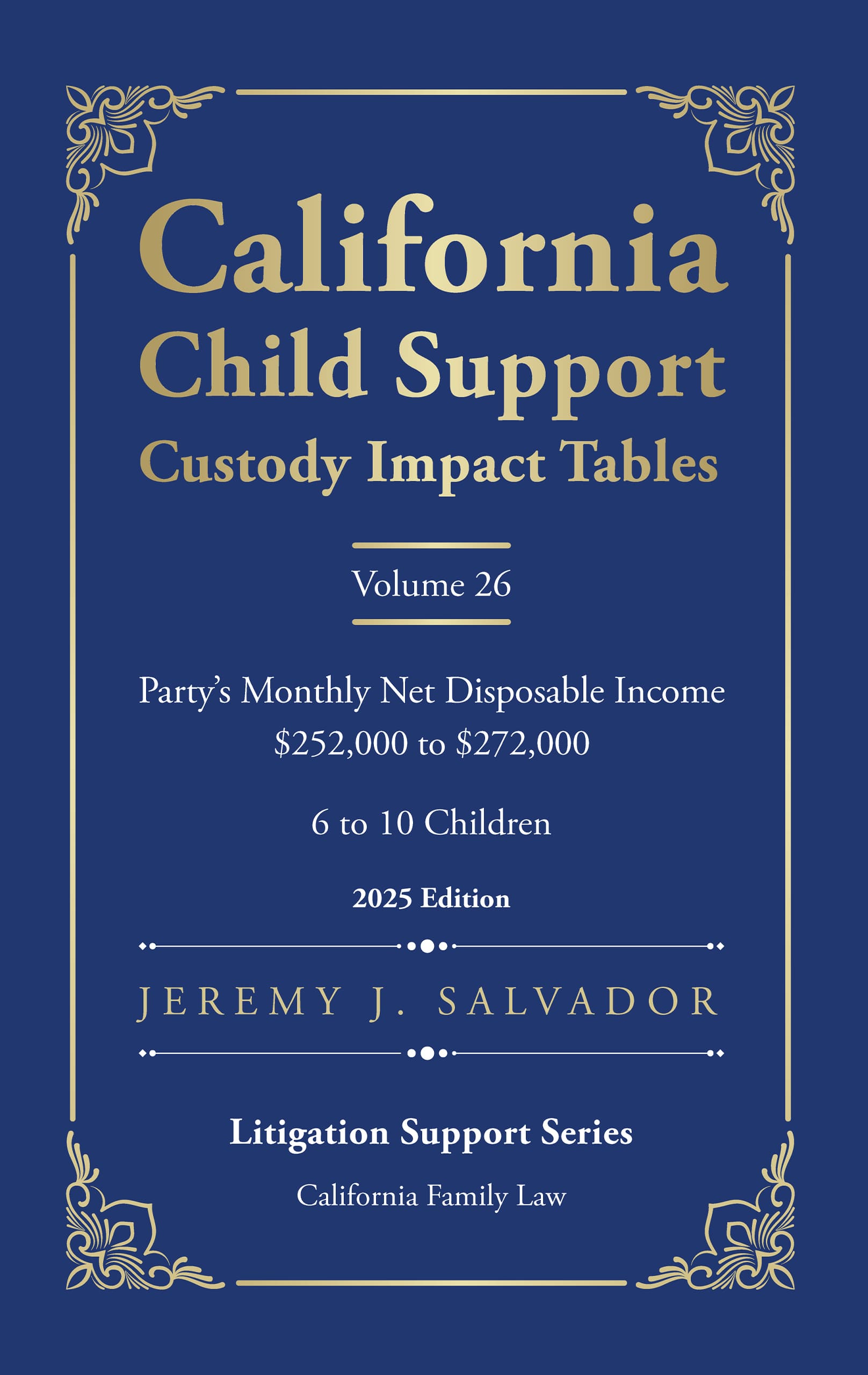
This volume pairs the same elevated income bracket with larger families, showing how support obligations are calculated when six to ten children fall within this range.
This volume pairs the same elevated income bracket with larger families, showing how support obligations are calculated when six to ten children fall within this range.
This volume moves further up the income scale, tracking how the guideline formula responds as monthly net disposable income continues to rise past the prior bracket, with family size held within the standard one-to-five range.
This volume moves further up the income scale, tracking how the guideline formula responds as monthly net disposable income continues to rise past the prior bracket, with family size held within the standard one-to-five range.
This volume pairs the same income bracket with larger families, illustrating how support obligations are calculated when six to ten children fall within this range.
This volume pairs the same income bracket with larger families, illustrating how support obligations are calculated when six to ten children fall within this range.
This volume advances further up the income scale, showing how the guideline formula responds as monthly net disposable income continues climbing past the prior bracket, with family size held within the standard one-to-five range.
This volume advances further up the income scale, showing how the guideline formula responds as monthly net disposable income continues climbing past the prior bracket, with family size held within the standard one-to-five range.
This volume pairs the same income bracket with larger families, capturing how support obligations are calculated when six to ten children fall within this range.
This volume pairs the same income bracket with larger families, capturing how support obligations are calculated when six to ten children fall within this range.
This volume climbs further up the income scale, tracking how guideline support calculations respond as monthly net disposable income continues to rise past the prior bracket, with family size held within the standard one-to-five range.
This volume climbs further up the income scale, tracking how guideline support calculations respond as monthly net disposable income continues to rise past the prior bracket, with family size held within the standard one-to-five range.
This volume pairs the same income bracket with larger families, showing how support obligations are calculated when six to ten children fall within this range.
This volume pairs the same income bracket with larger families, showing how support obligations are calculated when six to ten children fall within this range.
This volume climbs into a further elevated income bracket, showing how the guideline formula behaves as monthly net disposable income continues to rise, with family size held within the standard one-to-five range.
This volume climbs into a further elevated income bracket, showing how the guideline formula behaves as monthly net disposable income continues to rise, with family size held within the standard one-to-five range.
This final volume in the series pairs the highest income bracket with the largest family size, representing the outermost combination of income and children covered by the guideline formula.
This final volume in the series pairs the highest income bracket with the largest family size, representing the outermost combination of income and children covered by the guideline formula.